
Why a Disabled Control Can Still Become a Dangerous API Call
A grayed out button may only shape what the user sees. Real protection comes from the server rechecking permission for each exact action, target, and request.

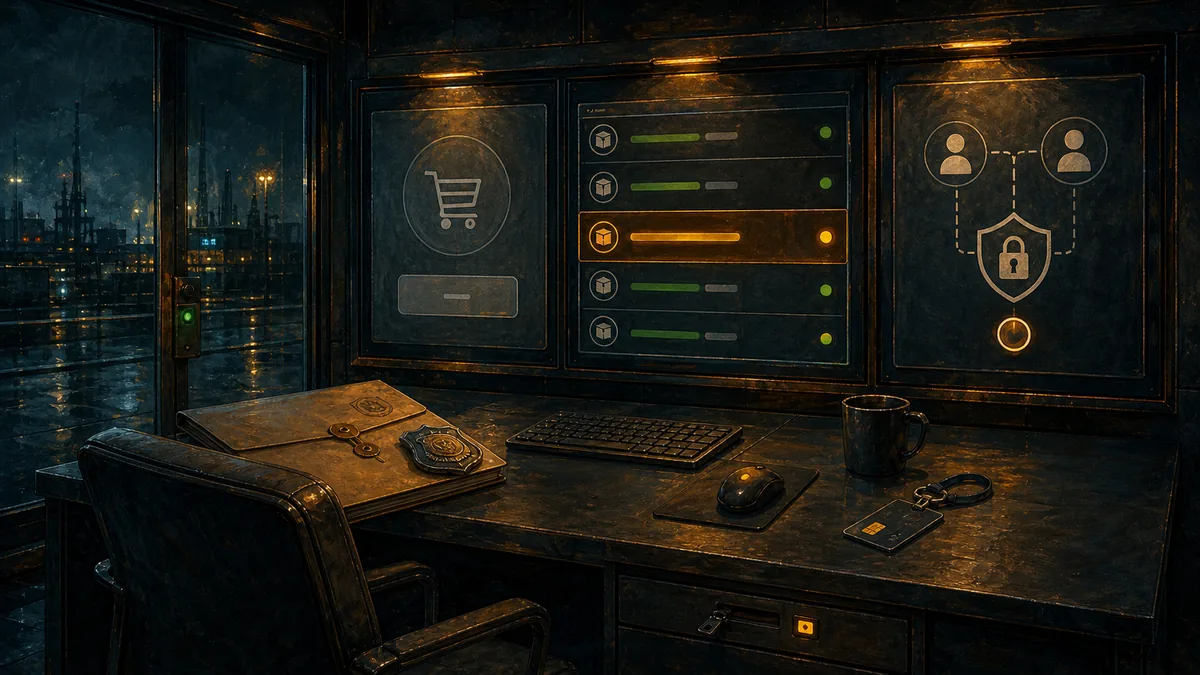

A disabled control can be useful for guiding users, but it is not the same thing as enforcing authorization. The important distinction is between what the interface discourages and what the server actually allows. If a browser can still send a request, the server must decide whether that specific request is permitted at that moment.
Why the server must check each request
Authorization is only reliable when it is checked on every request, not just when a page loads or when the interface chooses to show or hide a control. That matters because requests can arrive from different paths, including browser scripts and server-side flows. Security also fails open if one access control check is missed, because an attacker only needs one path that is not guarded. A deny-by-default approach reduces that risk by making unrecognized or unmatched requests fail unless a rule explicitly allows them.
Hypothetical example: a customer support portal greys out a refund button for an agent who can only approve returns under $50. If the browser still sends a refund request for $500, the button itself has done nothing to stop the request. The server must inspect the exact order, the amount, and the agent's current authority before it approves anything. If it checks only the logged-in role and skips the order amount, that is a gap the user interface cannot fix.
What the browser does and does not protect
Browser security boundaries help, but they solve a different problem. The same-origin policy keeps one origin from reading or writing another origin's storage, and JavaScript from one origin cannot access storage belonging to another origin. That reduces cross-site interference, but it does not replace application authorization. A request that reaches the right server still needs to be checked against the app's own rules. Likewise, relaxing origin checks with document.domain is deprecated because it weakens those protections and can create security bugs.
- Browser isolation limits some cross-origin access, but it does not decide whether a business action is allowed.
- A disabled control only changes the interface, not the trust decision the server must make.
- The safest pattern is deny by default, then allow only the exact action, target, and user state that match a rule.
- Least privilege means giving only the minimum authority needed, both across peers and across higher and lower privilege levels.
A practical way to think about the risk
A good mental test is simple: if someone can reach the action without using the visible button, has the server still made the same authorization decision? If the answer is no, then the UI was only a hint. The real control is the server-side check that examines the action itself, the object being changed, and the moment the request is submitted. That is why secure design treats every request as untrusted until it is checked.
Your reaction
Loading reactions…


Comments 0
Review comments