
Why Clicking Log Out Doesn't Always Kill a Stolen Session
When you log out of a web application, you expect your session to end. However, a dangerous gap between client-side cookie deletion and server-side token revocation can leave your account vulnerable to attackers who have already stolen your session data.

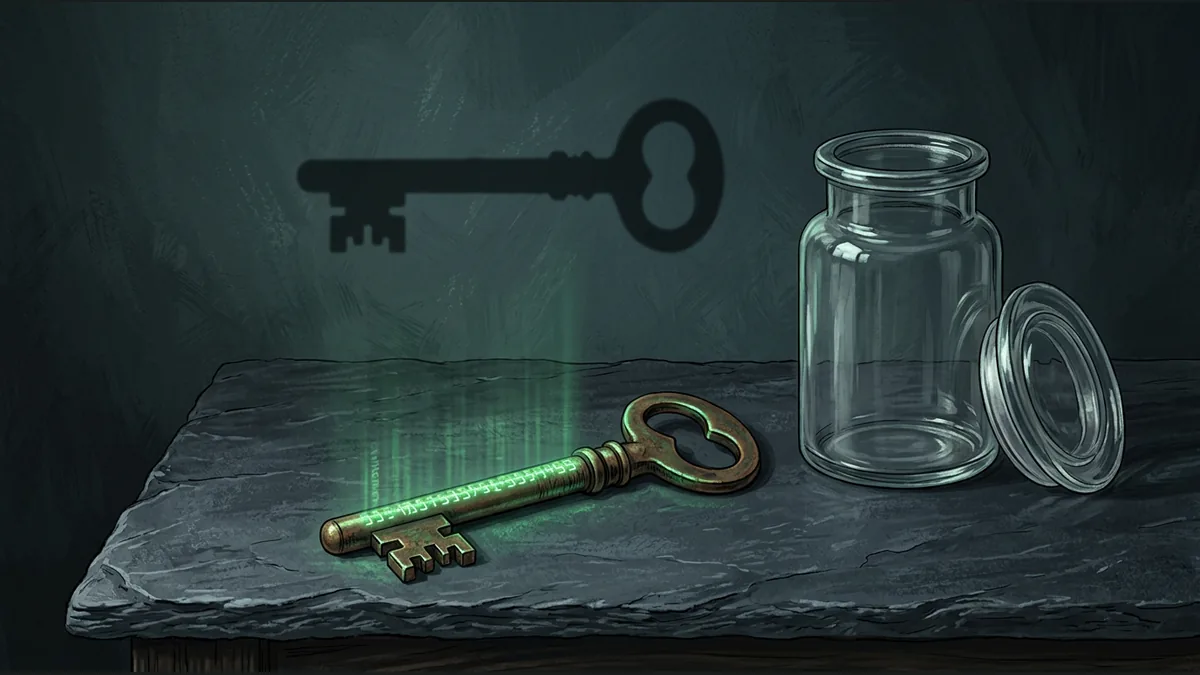

For most web users, clicking the "Log Out" button is the ultimate safety measure when leaving a shared computer or securing an account after a suspected security incident. We assume that logging out acts as an immediate kill switch, rendering any previous access to the account completely invalid. However, in modern web architecture, this assumption is frequently incorrect.
The vulnerability lies in how modern applications handle session states. While clicking log out successfully cleans up your local browser, it often fails to invalidate the session on the application's backend server. If an attacker has already managed to copy your session credentials, they can continue to access your account long after you believe you have safely logged out.
How Browsers Handle Logouts
When you log into a website, the server typically issues a session identifier stored in a browser cookie. To log you out, the server must instruct your browser to destroy this local cookie. It does this by sending a response header that overwrites the existing cookie, setting its Max-Age attribute to zero or a negative number, or setting its Expires attribute to a date in the past. When your browser receives this instruction, it immediately deletes the cookie from its local storage.
While this successfully prevents anyone else using that specific physical browser from accessing your account, it only addresses the client side of the equation. If the underlying session token remains valid on the server, the session itself is not truly dead.
The Vulnerability of Stolen Tokens
Session tokens are designed to be highly complex and random. This high level of entropy is excellent for preventing guessing attacks, where an attacker tries to randomly generate a valid session ID. However, high entropy offers absolutely no protection if the token has already been exposed or read. Anyone who manages to copy an active session token can reuse it without needing to guess it, provided the token has not expired.
Attackers can steal these tokens in several ways. Even when developers apply modern security attributes like the Secure flag, anyone with physical or administrative access to the client's hard disk can read and copy cookie data directly from the browser's local database files. Once an attacker successfully steals a session ID, they can simply import that cookie into their own browser to impersonate the victim and take control of the account.
A Hypothetical Attack Scenario
Consider a hypothetical scenario where a user logs into a web application. The server issues a stateless JSON Web Token (JWT) stored in a browser cookie that is configured to remain valid for 12 hours. One hour into the session, a piece of malware running on the user's machine quietly copies the browser's active cookie database and transmits it to an attacker. A few minutes later, the user decides to log out and clicks the "Log Out" button. The application successfully instructs the browser to delete the local cookie. However, because the application relies on stateless JWTs, the server does not maintain an active database of revoked tokens; it merely checks if the cryptographic signature on any presented token is valid. Because the attacker holds a copy of the original cookie, they can import it into their own browser and freely access the user's account for the remaining 11 hours of the token's natural lifespan, completely unaffected by the user's client-side logout.
Why Stateless Architectures Fail to Revoke
The reason this gap exists is the widespread adoption of stateless session management, often used to improve application performance and scalability. In a traditional stateful system, the server checks a central database for every request to verify if a session ID is still active. If a user logs out, the server deletes the session from the database, instantly invalidating it globally.
In a stateless system, the server does not keep a list of active sessions. Instead, it trusts any incoming token that carries a valid cryptographic signature. While this saves the server from performing costly database lookups, it means the server has no way to "forget" an individual token before its expiration date unless developers implement a complex, active blocklist to track revoked but unexpired tokens.
Mitigating the Session Hijacking Risk
To protect users from this vulnerability, application developers and security teams must implement strategies that bridge the gap between client-side deletion and server-side invalidation:
- Implement short-lived access tokens paired with refresh tokens that can be explicitly revoked on the server.
- Maintain a server-side blocklist of logged-out token identifiers until their natural expiration time passes.
- Bind session tokens to specific client characteristics, such as IP addresses or device fingerprints, to detect anomalous reuse.
- Provide users with a "Log out of all devices" option that actively invalidates all active sessions on the backend database.
Key Takeaway for Users
Clicking "Log Out" is an essential step to secure your browser locally, but it is not a guarantee that your session is dead on the server. Because stolen tokens can often bypass client-side logouts, keeping your local machine free of malware and securing physical access to your device remain your primary lines of defense.
Your reaction
Loading reactions…


Comments 0
Review comments