
Why Your Database Thinks a Write Is Finished Long Before the Platter Spins
When a database executes a write command, the data rarely hits physical storage immediately. Understanding the layers of caching between your application and physical media is crucial for preventing data loss.

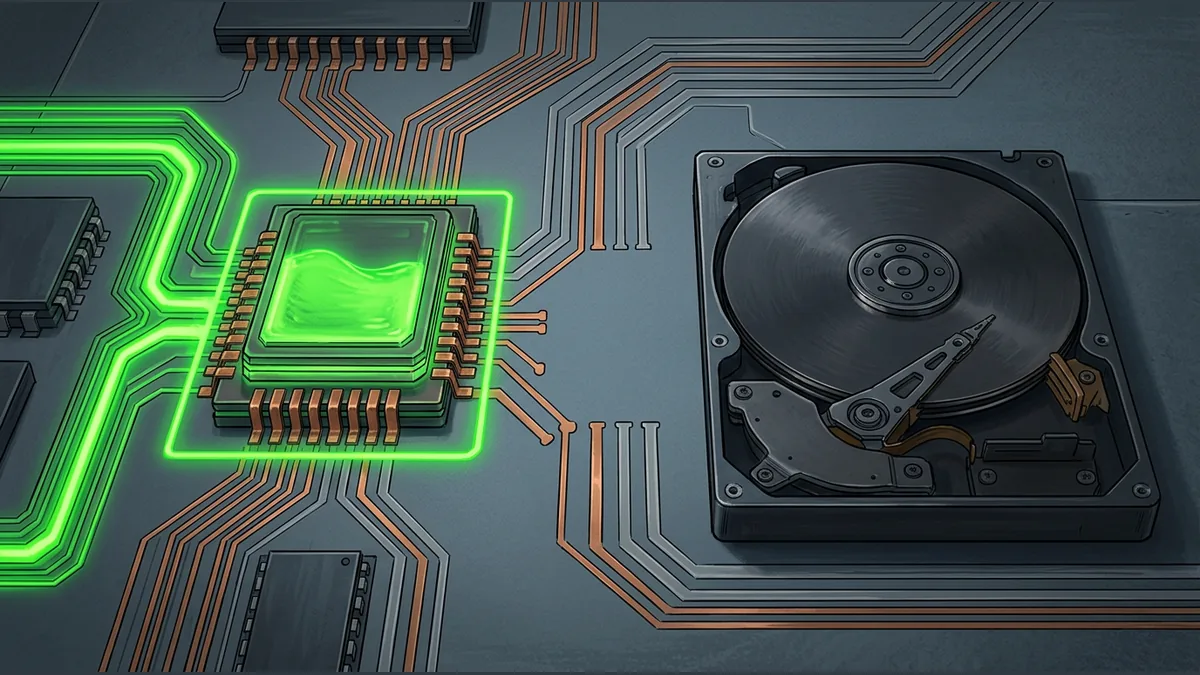

When an application writes data to a storage device, it receives a confirmation almost instantly. However, this success signal does not mean the data is safely written to physical media. Instead, the data travels through a series of volatile software and hardware buffers, creating a gap between perceived completion and actual physical durability.
The Illusion of the Completed Write
Databases are designed with the expectation that the underlying operating system will optimize performance by buffering write operations. For instance, engines like SQLite operate under the assumption that write requests will return success status long before the data is actually committed to physical mass storage. This design allows applications to continue executing without waiting for slow physical disk operations, but it shifts the responsibility of ensuring durability to specific synchronization commands.
Inside the Operating System Page Cache
When a database writes to a file on a Linux system, the operating system does not immediately write to the physical drive. Instead, the data is placed into the system page cache, and the corresponding memory pages are marked as dirty. The operating system synchronizes these dirty pages with the physical storage device at a later time, such as when it needs to reclaim memory for other tasks. Furthermore, when a new file is created on common desktop operating systems, it is typically initialized only within this volatile disk cache, delaying the actual creation on physical storage until the operating system has idle resources.
Why Write Reordering Demands Explicit Flushing
Operating systems do not always write data to storage in the exact order the application requested. To optimize disk head movement and write efficiency, the system may reorder pending write operations. Because of this reordering, databases cannot rely on sequential write calls to guarantee logical order on disk. To solve this, database engines must explicitly call flush or fsync operations at critical transaction boundaries. These calls block further execution until the operating system confirms that all pending writes for the target file have been fully pushed to the storage subsystem.
A Hypothetical Breakdown of Volatile Cache Failure
Consider a hypothetical financial ledger application that records a transaction. The application invokes a standard write system call and receives a success code in just 0.1 milliseconds. At this point, the application logs the transaction as complete. However, the data is actually residing in the volatile DRAM cache of the solid-state drive or hard drive controller. If the system loses power at this exact microsecond, the volatile cache is wiped. Upon reboot, the application logs show a successful transaction, but the physical storage media contains only the old state, resulting in silent data corruption.
Protecting Data Integrity
- Ensure your database is configured to use explicit fsync or flush commands at critical transaction boundaries.
- Utilize uninterruptible power supplies to protect volatile drive controller caches from sudden power loss.
- Choose storage hardware that features power-loss protection to safeguard onboard DRAM buffers.
Understanding the boundary between volatile memory and physical storage allows developers to design systems that balance high performance with robust data safety.
Your reaction
Loading reactions…


Comments 0
Review comments