
Why the Same Battery Percentage Can Last a Different Amount of Time
Understanding why your device's battery percentage isn't a reliable timer requires looking at chemical age, temperature, and active workloads.

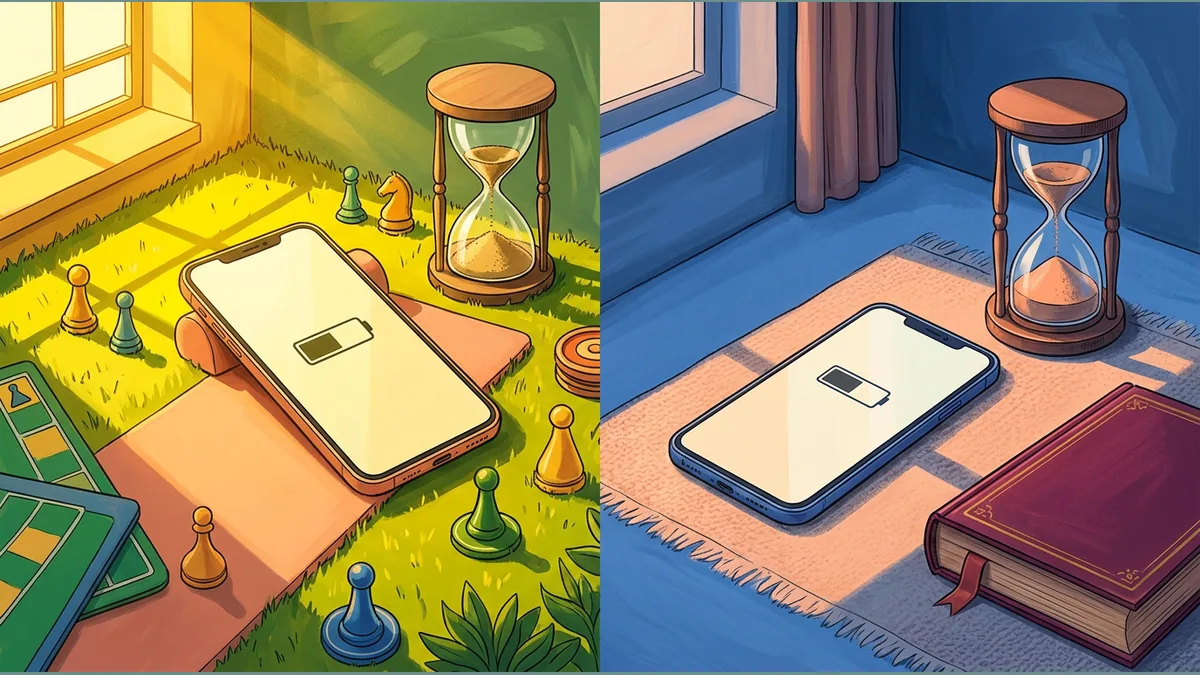

Many smartphone and laptop users have experienced a frustrating phenomenon: their device sits at 20% battery for an hour of light reading, but on another day, that same 20% vanishes in fifteen minutes. This discrepancy occurs because a battery percentage is not a direct countdown timer. Instead, it represents a state of charge, which must be interpreted alongside several dynamic environmental and physical factors to understand how much actual runtime remains.
State of Charge vs. Battery Health
It is crucial to distinguish between a device's current charge percentage and its overall battery health. The percentage displayed at the top of your screen only shows how much energy the battery currently holds relative to its maximum capacity at that moment. However, as a battery chemically ages, its maximum capacity permanently decreases. This means 50% charge on a brand-new phone represents a larger reservoir of energy than 50% charge on a three-year-old phone, even though the displayed percentage looks identical.
The Role of Temperature and Impedance
The physical environment plays a massive role in how efficiently a battery delivers its stored power. Inside the battery, electrical current faces internal resistance, known as impedance. When a device is exposed to low temperatures, or when the battery's state of charge is already low, this impedance can increase. High impedance makes it harder for the battery to deliver the necessary voltage to power the device, which can cause the remaining charge to deplete much faster than expected or even cause the device to shut down unexpectedly.
To understand this, imagine two identical phones both starting at 15% charge. If you use one phone indoors at room temperature to read a text-based article, the low impedance allows the battery to drain slowly and predictably. If you take the second phone outside into freezing winter temperatures, the sudden drop in temperature increases the battery's internal impedance, forcing the system to work harder to draw power and causing the remaining 15% to drop to zero in a fraction of the time.
How Active Workloads Change the Equation
Beyond physical age and temperature, your immediate actions dictate how long a specific percentage will last. Battery runtime is highly dependent on the active workload of the device. Intensive tasks draw significantly more current, accelerating the drain. Reducing some of this activity can directly change your power consumption.
- Reducing screen brightness to lower the display's power draw.
- Closing demanding background applications to reduce processor activity.
- Disabling high-bandwidth wireless features when they are not needed.
The Takeaway for Users
Because battery depletion is highly variable, users should not rely on the charge percentage as an exact predictor of remaining minutes. To get the most out of a low battery, manage your device's environment by keeping it at a moderate temperature and minimize demanding tasks to reduce power consumption.
Your reaction
Loading reactions…


Comments 0
Review comments