
Why Cancelling a Task Doesn't Instantly Stop It
When developers cancel an asynchronous task, they expect immediate resource reclamation. However, because cancellation is cooperative, a task must actively check for the signal or risk causing silent CPU and memory leaks.

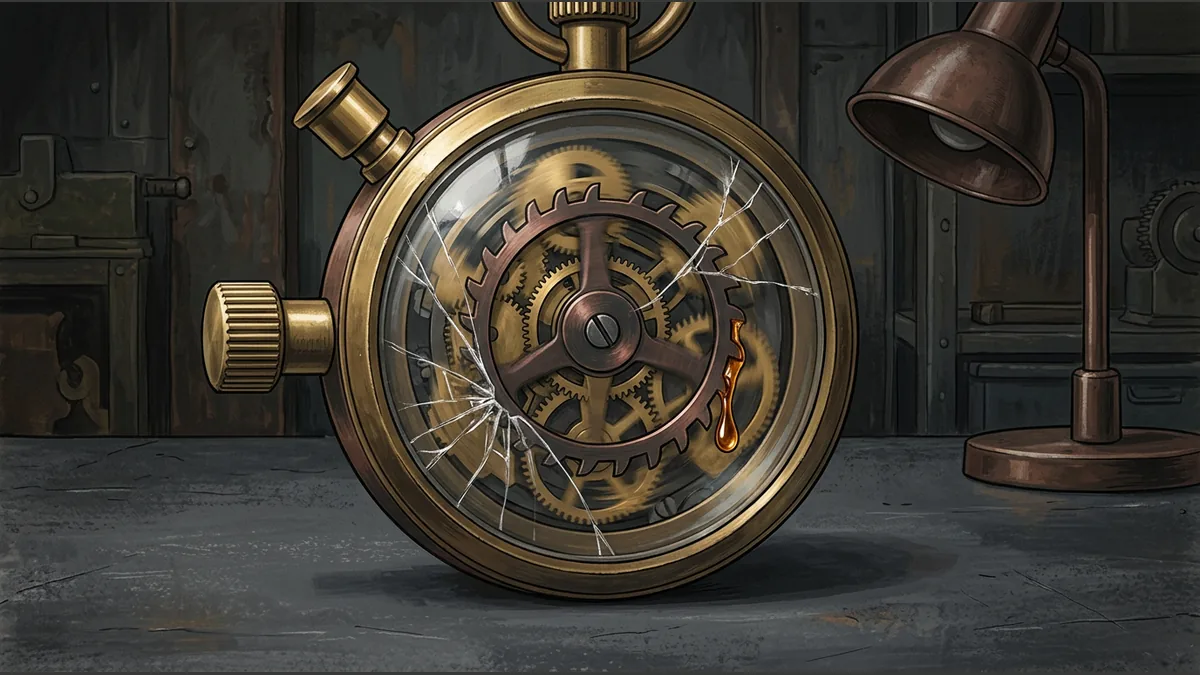

When a developer triggers a cancellation command in modern software, they often expect the target task to stop immediately and release its resources. However, in most asynchronous runtimes, cancellation is cooperative rather than preemptive. The runtime cannot safely terminate a running thread or coroutine at an arbitrary instruction without risking memory corruption or leaving resources in an unstable state. Instead, the task itself must actively check for a cancellation signal and yield control voluntarily.
When Cancellation Reaches the Task
In asynchronous frameworks such as Python's asyncio, a cancellation request does not instantly halt execution. Instead, the cancellation exception is not raised immediately, but rather at the next opportunity. This delivery typically happens when the task hits an active suspension point, meaning the active cancellation is delivered as an exception that interrupts an await expression. If a task is busy performing heavy synchronous computations or is blocked on a non-asynchronous system call, it will not hit an await expression, and the cancellation signal will remain ignored until that synchronous block finishes.
A Loop That Never Yields
Consider a hypothetical photo-processing application where a user initiates a heavy image-blurring task and then quickly swipes away to another screen. The application flags the cancellation token to stop the background work. However, the underlying loop processing the pixel array does not contain any checks for the cancellation flag inside its inner loop. Because the CPU is fully occupied with synchronous pixel calculations and never yields control, the CPU core remains pinned at 100 percent for another four seconds, processing pixels for a screen that no longer exists.
Cleaning Up After Cancellation
Another common issue arises when developers attempt to handle errors too broadly. If a coroutine explicitly catches and swallows the cancellation exception, structured concurrency components can misbehave. For instance, parent tasks or timeout managers rely on these exceptions to coordinate multiple concurrent operations. To ensure proper clean-up and cooperative cancellation behavior, any caught cancellation exception should be propagated back up the call stack after any necessary local clean-up is complete.
- Insert regular cooperative yield points or cancellation checks in long-running loops.
- Avoid broad try-except blocks that catch all exceptions without re-raising the cancellation exception.
- Ensure that any caught cancellation exception is propagated to allow structured concurrency tools to function correctly.
The key takeaway is that task cancellation is a partnership between the runtime and your code. Writing robust asynchronous software requires designing tasks that are self-aware, regularly checking for cancellation signals, and cleanly propagating exceptions to prevent wasted system resources.
Your reaction
Loading reactions…

Comments 0
Review comments